




A Note from Ross Mackay, Founder of Cadence
I Spent Two Years Testing Every Electrolyte Product on the Market.Then I Stopped.
What the labels actually say, and why I built something instead of settling.
Ross Mackay · Founder, Cadence Performance · 5 min read
If you've tried LMNT, Nuun, Science in Sport, Liquid IV, or anything else in the sports hydration aisle, and still felt like something wasn't quite landing, I want to tell you exactly why.
Not because I have a product pitch. I'll get there. But because understanding what's actually inside most electrolyte products changed the way I looked at everything I was doing wrong.
And I was doing it wrong for years before I built Cadence.
I'm a runner. I've trained consistently most of my adult life. And for a long time, I spent sessions underperforming in ways I couldn't explain, recovering slower than I expected, and waking up the morning after long efforts feeling like the sleep hadn't touched the fatigue.
I blamed training load. Nutrition. Sleep quality. I read every article I could find about overtraining, periodisation, and recovery protocols. I changed training volume. I dialled sleep. I bought a Whoop.
Nothing moved the dial.
Then one afternoon I sat down and actually read the labels of everything I'd been using.
That Was The Beginning Of Cadence.

Here’s What The Labels Told Me.
Average sweat sodium loss for one hour of training: 500–700mg. Not one product on the shelf was built around it.
LMNT
Built for keto: double the training requirement
1,000mg
Nuun
Barely half of what you lose per hour
300mg
Sports drinks
Plus 26g of sugar and three artificial colours
200-300mg
LMNT
1,000mg
Sodium per serving
Designed for keto dieters who eliminate carbohydrates and need elevated sodium to compensate for the loss of insulin-driven retention. That's a specific and legitimate use case. But I'm not on keto. I'm a training athlete losing 500–700mg of sodium per hour of exercise. I had been overdosing sodium for months and wondering why easy sessions felt rough. The excess sodium was creating its own osmotic imbalance, not solving mine.
NUUN
300mg
Sodium per tablet
I looked up the exercise physiology. Nuun was replacing barely half of what an hour of training takes out. I'd need two tablets to close the gap. And at that unit cost, nobody does that consistently.
Mainstream sports drinks
200-300mg
Sodium per serving
With 26 grams of sugar and three artificial colours to make you forget what you were reading. Not one of them hit the number I was looking for.
500mg
Average sweat sodium loss for one hour of training. Replace what you lose. Precisely. Nothing more. Nothing less.
I couldn't find a single product built around it.
The Problem No One Was Solving.
I'd also been thinking about hydration the wrong way. I was treating it like a session activity: drink before the run, drink during if it was long, done. That's the model every sports drink brand trains you into, because it's the model that sells the most product.
But Hydration is Continuous
Your body runs three hydration windows every 24 hours. Here's what each one costs you, and what the shelf offers it.
Window 01 · Through the Day
The deficit compounds.
Sodium gaps don't reset between sessions. The deficit you build on Tuesday shows up as Wednesday's flat legs. And past a certain threshold, dehydration stops announcing itself as thirst: it shows up as poor concentration, slower reaction time, and sessions that feel harder than they should.
Built for this window
None.
Window 02 · The Session
500–700mg out, every hour.
The one window the industry does build for. You've seen the labels: keto doses, half doses, sugar with colours. Covered, but covered badly.
Built for this window
Plenty. Mostly mis-dosed.
Window 03 · Overnight
Eight hours of unreplaced loss.
Your body sweats and breathes out water vapour all night, exactly while it runs the adaptation, muscle repair, and hormonal cycles training is designed to stimulate. The most important window of the 24 hours. Nothing was built for it.
Built for this window
None.
3
Different hydration needs

3
Different formulas required
0
Products addressing all three
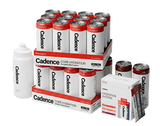
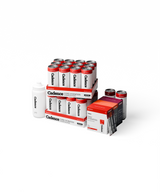
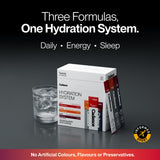
So I built one system
Not Three Flavours In A Box. It’s a 24-Hour Hydration Protocol.
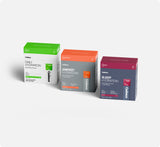
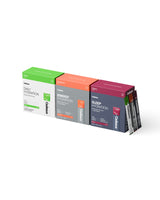
Daily → Energy → Sleep. Three sachets. Three windows of the day. One system.
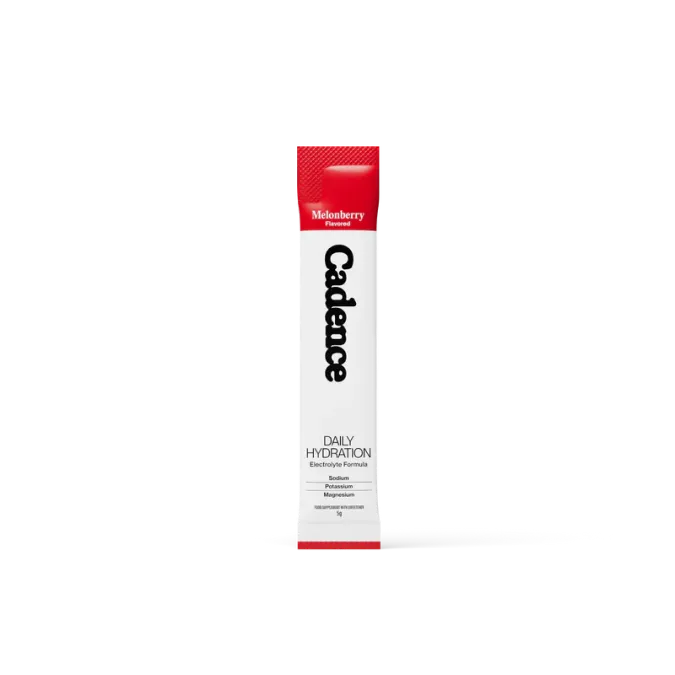
Daily · AM + Training
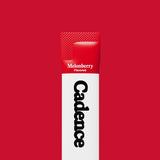
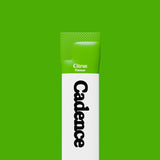
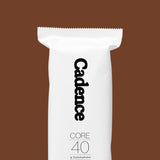
Daily Hydration Sachets
500mg Sodium
Potassium · Magnesium · Calcium
The daily driver. 500mg sodium, precisely dosed at the average sweat loss replacement threshold. Potassium, magnesium, and calcium at ratios designed for absorption. This is the morning sachet, the training sachet, the one you reach for when you know the day is going to be long and you want to start it right. Formulated to maintain the baseline. The one most customers notice first, not because of an acute effect, but because sessions start feeling like the effort they actually are.
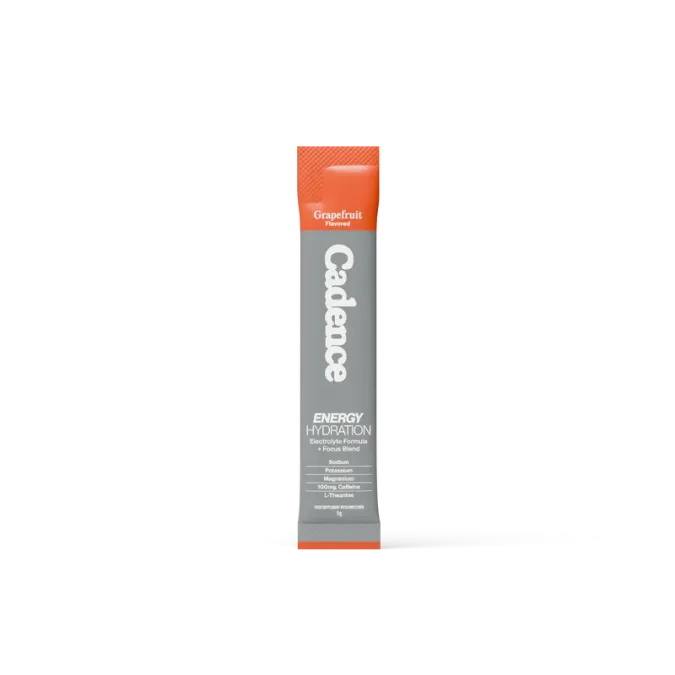
Energy · Hard Sessions
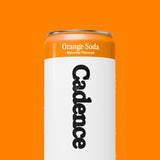
Energy Hydration Sachets
500mg Sodium
100mg Caffeine
200mg L-Theanine
The same electrolyte base (500mg sodium, full profile) with 100mg caffeine and 200mg L-theanine added. The L-theanine counters the spike and the crash. You get levelled, sustained energy that doesn't leave you jittery at 10am or flat by 2pm. This is the sachet for hard sessions, race morning, back-to-back training days, or the afternoon when you need to be on. It exists because caffeine without the right hydration foundation is a half-solution.
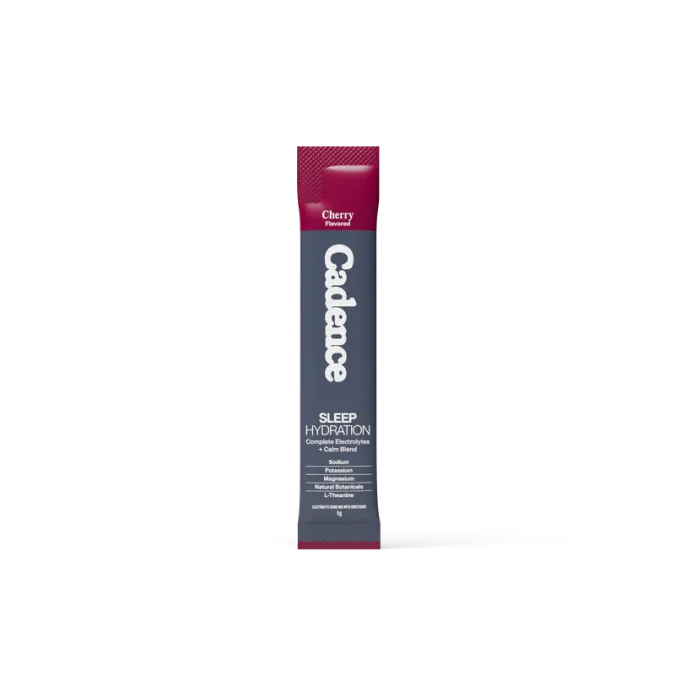
Sleep · OvernighT
Sleep Hydration Sachets
100mg Sodium
7 Sleep-Support Actives
This one is built differently. A dialled-down electrolyte formula (100mg sodium, matched to the gentler overnight requirement) combined with seven sleep-support ingredients: glycine, L-theanine, magnesium, and others. Not a general wellness sachet with a vague recovery claim on the front. Purpose-built for the overnight window where the adaptation from all that training is actually happening. The customers who add this one are usually the ones who notice the biggest shift in how they feel the following morning.
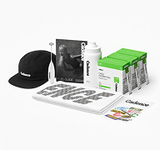
Start the 30-Day System
What Others Have Experienced
I could tell you what I noticed. But after two years of running the system and watching others do the same, these are the patterns I keep hearing.


A 12-Minute Personal Best in Barcelona.
"The brand that takes cramps and sodium seriously. The gels really helped me in Barcelona Marathon getting my first sub-3 and a 12 min PB with a 2:52 time."
UK Customer · Verified Buyer

"It's not about doing more, it's about doing things more consistently so you're not constantly playing catch-up. I've found it takes that mental load off."
UK Customer · Verified Buyer
"500mg of sodium is what I need to kick-start my day. With LMNT I would get headaches. Will be ordering more."
Mark K. · Verified Buyer
"I take a Core sachet every morning, with a Sleep sachet every night. I feel a difference in sleep quality when I take it vs when I don't."
UK Customer · Verified Buyer
"Cadence has helped me fuel properly for my first marathon. The recovery drink has helped me stay injury free on this training block."
Mark K. · Verified Buyer


What the First 30 days Actually Look Like.
This isn't a supplement that hits you in hour one. The adaptations you've been chasing are already happening. You've just been running them on a sodium deficit that slows everything down.
Week 1
Week 1 · You're replacing the deficit.
You're replacing the deficit.
The sessions feel roughly the same. You're replacing the deficit, not overloading a new system. Some people notice the 3pm slump is slightly less. Some don't notice anything yet. That's normal.
Week 2
Week 2 · Sessions start feeling like the effort they're supposed to be.
Sessions start feeling like the effort they're supposed to be.
The tempo that felt like a 7-out-of-10 effort moves back toward a 6. Recovery between sessions tightens. You stop writing off the flat afternoons as general tiredness.
Week 3 Onwards
Week 3 Onwards · Sleep quality shifts.
Sleep quality shifts.
The mornings after hard sessions improve. Training volume starts to feel sustainable in a way it didn't before. The customers who notice the biggest change are usually the ones who were most deficient to begin with, and didn't know it.

This is what adequate electrolyte dosing looks like when applied consistently. Not dramatic. Just the performance you've been training for, finally landing the way it should.
No Sugar Electrolyte Hydration
No artificial colours
No proprietary blends hiding underdosed ingredients
The Word On The Street
Hydrating worldwide


The Questions I Hear Most
LMNT works for the context it was designed for. If you're training on a standard diet and using LMNT, you're getting roughly twice the sodium your body needs from exercise. That's not dangerous, but it's not precision either. Precision means replacing 500mg, not 1,000mg. There's also no Sleep formula in LMNT. The 24-hour system angle is what makes Cadence different, not just the daily sachet.
Nuun replaces approximately 300mg of the 500–700mg you lose per hour of training. For the remaining deficit to close, you need two tablets, and at that point the cost comparison changes. Cadence is priced for what it actually delivers: the right dose, the right profile, three formulas across the day. On a subscription, the Daily sachet works out to less than a coffee per day.
The Daily and Energy sachets are the most positively reviewed products in the range. The Sleep sachet has a distinctive flavour driven by its high-dose active ingredients. I've always been upfront about that. The sleep benefits are real; the flavour is specific. Most people adapt to it quickly. If the system isn't for you, cancel before the next order ships.




I built Cadence because the product I needed didn't exist. Two years of testing everything on the market. Two years of sessions that didn't feel like they should. Then one afternoon reading every label in my sports bag and realising the gap was the formula, not my fitness.
There is now a 24-hour hydration system built around the numbers exercise physiology actually supports. Not the numbers that look good on a shelf.
If you've been training consistently and not getting what you should from it, the answer is probably not more volume. It's the thing you've been missing every day.


Fix the Formula
30% off first order · Free gifts in Month 2 & 3 · Cancel anytime
Start the 30-Day System · Subscribe & Save 30%
DISCLOSURE
Cadence products are not intended to diagnose, treat, cure, or prevent any disease. Results described reflect individual customer experiences and are not guaranteed. Cologne List® certification confirms independent testing for banned substances in sport.